
Soil shifts, but your foundation shouldn’t. We approach residential concrete services through the lens of material science—calculating localized soil load capacities and chemical curing kinetics to deliver zero-deflection structural slabs that outlast environmental stress.
The Problem: The underlying cause of cracked driveways and sagging foundations is almost always excess water added to the transit mixer. While this shortcut makes concrete services faster and easier for uncertified crews, it chemically dilutes the crystalline matrix during hydration. As evaporation occurs, microscopic voids form inside the matrix, dropping the compressive strength far below its rated PSI and leaving the slab vulnerable to severe winter frost heaving.
We treat every pour as a critical structural asset. Our concrete specialists calculate exact water-to-cement ratios, enforce strict slump parameters, and analyze mechanical shear vectors to ensure your foundations and architectural flatwork achieve maximum density and multi-generational lifespans.
Adding extra water destroys concrete from within. We enforce a strict, low water-to-cement ratio verified by on-site testing. This creates a highly dense calcium-silicate-hydrate gel matrix, maximizing the final compressive strength of the slab while eliminating surface curling and drying defects.
Concrete naturally has incredible crushing strength but fails under bending or pulling forces. We construct heavy Grade 60 rebar cages raised on support chairs to sit exactly in the high-tension zone, adding micro-synthetic fibers to the mix to stop micro-cracks before they can spread.
If concrete dries out too quickly, the crystals cannot form properly, leaving the surface weak and dusty. We seal our fresh pours with high-performance moisture-retaining curing membranes or thermal blankets, forcing the hydration process to complete evenly across the entire depth.
Our Work
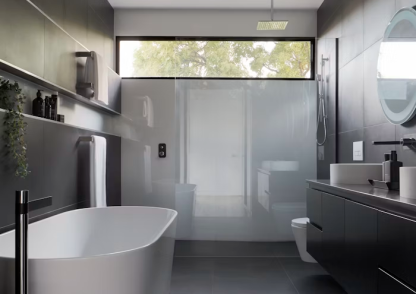
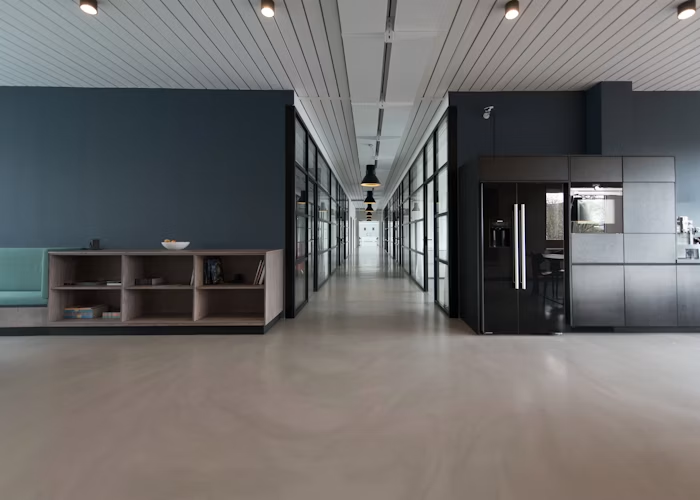
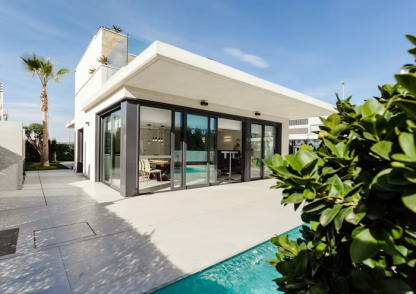
We let our work speak for itself. Browse through our recent custom home remodeling projects across Seattle and get inspired for your own transformation.



We completely ban low-grade unwashed aggregate mixes and weak regional cement batches that cause internal chemical breakdown. Every mix design we use meets strict structural code requirements.
We utilize advanced Type I/II Portland cement bases formulated to control heat output during deep structural pours, providing excellent defense against sulfate reactions found in local soils.
We reinforce our structural work using exclusively heavy-gauge, Grade 60 deformed steel bars. Their deep ridges create a strong physical lock with the curing concrete, giving the slab massive tensile resistance.
Instead of using cheap surface coatings that quickly flake off, we apply deep-penetrating silane-siloxane sealers. They chemically react inside the microscopic pores to shed water from the outside while allowing internal air vapor to escape safely.
Our systemized multi-phase pouring flow removes the unpredictability of traditional concrete work, delivering a highly technical, synchronized construction process.
We excavate to steady native soils and run heavy mechanical compactors over engineered gravel bases, eliminating soft spots to stop future slab sinking.
Our team sets up rigid structural forms using digital lasers for perfect leveling, then builds and raises the steel rebar grids to the exact center of the pour zone.
We lay thick poly vapor barriers to block ground moisture from rising, then place the mix cleanly using automated pumps to avoid aggregate separation.
We use industrial immersion vibrators to remove trapped air pockets, screed the surface flat, and finish with gas-powered trowels to achieve dense, incredibly durable flatwork.
We apply premium curing membranes to lock in moisture, monitor the hydration cycle, and pull test cylinders to verify the pour hits full design strength.
Budgets depend heavily on sub-grade soil extraction needs, excavation depth, accessibility for heavy pump trucks, and the specified rebar thickness grid. Setting up laser forms and using specialized low-water mixes requires more skilled labor than quick unreinforced pours, but it completely eliminates early cracking. We lock in your budget with comprehensive, fixed-rate contracts.
Concrete naturally shrinks slightly as its moisture cures. If a crew adds too much water to the truck or misses control joints, the slab will crack randomly. We combat this by utilizing exact water-cement ratios, adding poly-fibers to the mix, and cutting straight control relief joints at calculated distances to guide natural shifting safely.
Bare ground constantly passes moisture vapor upward through capillary action. Without a heavy poly vapor barrier, this moisture migrates right through the porous concrete, ruining interior flooring adhesives and causing mold growth. We seal our sub-bases to isolate the concrete entirely from damp soil.
While concrete sets up visually within 24 hours, it takes 28 days of hydration chemistry to reach its full design strength. Typically, a slab can handle light foot traffic after 48 hours, but we strictly recommend keeping heavy vehicles off the surface for a minimum of 7 to 10 days while the chemical matrix hardens.
Glossy acrylic sealers sit on top like a film, trapping internal moisture and quickly flaking off during freeze-thaw shifts. Penetrating silane-siloxane sealers dive deep inside the microscopic pores of the slab. They chemically line the pores to shed liquid water from the outside while still allowing trapped internal air vapors to escape safely.
Stop gambling your property’s future on cheap, watered-down pours that settle and crack. Partner with the concrete engineering and material science experts at Iconiq Construction to lock down absolute stability.